

✦Summary
AI doesn't replace the branding process, but it changes its pace and its decision points. Competitor research, concept exploration and testing a visual language across dozens of applications now take hours rather than weeks. Choice, precision and accountability for the result stay in human hands. This article walks through an AI branding process step by step: where AI genuinely helps, where it's risky, and what to ask a studio that works with it.
Many founders now arrive at their first branding meeting with a folder full of logos they generated themselves with AI tools. Some are attractive. Almost none answer the question that actually matters: why this business, and why this form? The feeling is familiar — endless options, no direction. The gap between "lots of outputs" and "a brand" is exactly what a professional branding process is designed to close.
Karnaf Studio has been doing branding since 2003. In recent years we've brought AI tools into almost every stage of our work, and we've learned from experience where they save time and where they can steer a brand in the wrong direction.
What actually changes in the branding process?
A good branding process has always had the same core stages: understanding the business and its audience, research, strategy, concept, design and rollout. AI doesn't add new stages. It changes three things:
- Iteration speed. Each concept direction used to take days. Now you can test many directions earlier and reserve deep design time for the ones that deserve it.
- Research depth. Analyzing competitors' visual language, summarizing interviews and reviews, and mapping market messaging can be done at a scale that used to be impractical for smaller companies.
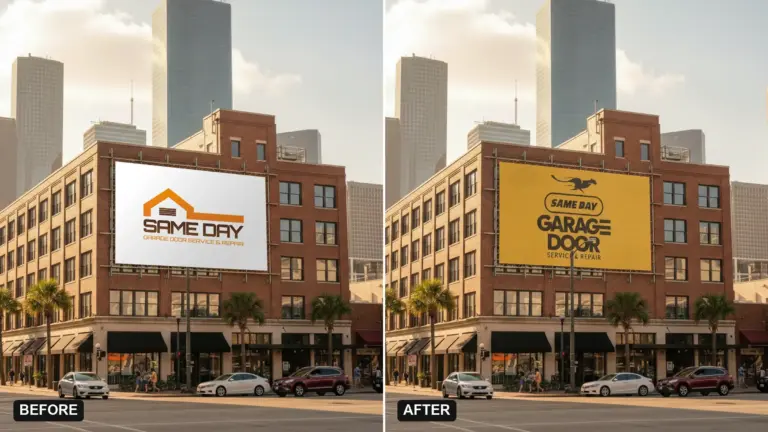
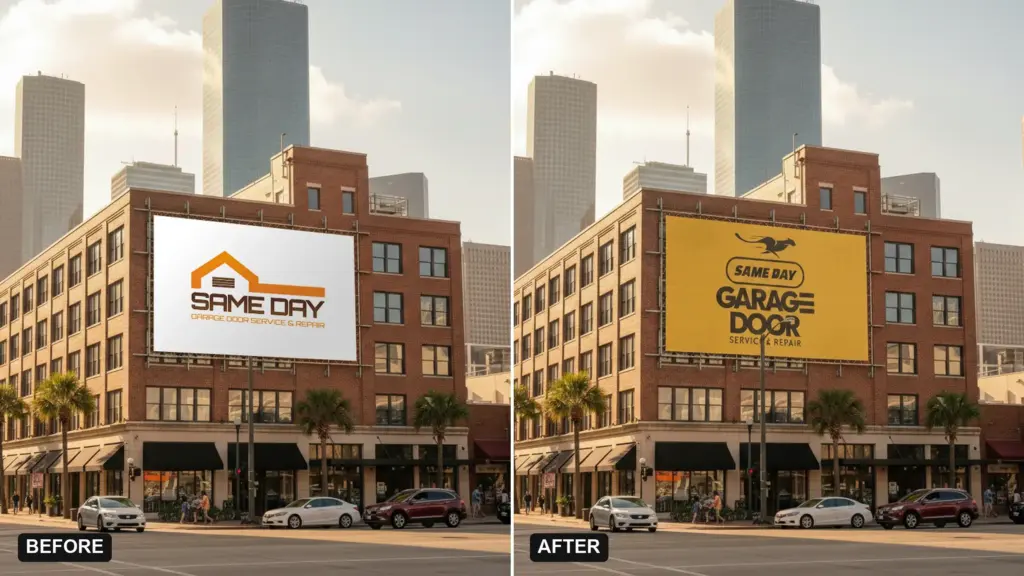
- Testing on applications. You can see early how a visual identity will look on packaging, signage, social posts or screens — before investing in production.
What doesn't change? Deciding what the brand says, to whom, and how it's different. AI can't decide that, because it doesn't know your business, your customers or your story.
Step by step: where AI fits in
1. Discovery — no AI
The first stage stays fully human: conversations with the founders, understanding business goals, audience, pricing and ambitions. This is the foundation everything else rests on. An AI tool can help transcribe and summarize the meeting, but it can't run it.
2. Market and competitor research — AI as accelerator
This is where AI saves the most time. It can help collect and sort competitors' visual languages, spot colors and styles that recur across a category, and summarize what customers say in reviews. The result is a landscape map that shows where the market is crowded and where there's room to stand out.
Important: every finding is verified manually. AI tools can invent data or mix up brands, so we treat their output as a research draft, not as fact.
3. Strategy and positioning — human, with AI as a sparring partner
From the research, we define the foundations: values, brand promise, audience and tone of voice. A language model can propose alternative phrasings or challenge assumptions ("what if the audience is actually…?"), but the decision is a business and creative call that we make together with you.
4. Concept and visual language — AI to explore, designers to decide
Here AI works like a fast moodboard, helping test directions in color, texture, mood and photographic style. The logo itself is built by hand: sketches, grid, typography, optical balance, and testing at small sizes and in black and white. There's also a legal reason for that, which we cover below.
5. Testing on applications — AI as a lab
Once the visual language takes shape, it can be placed into different scenes: a storefront, packaging, a landing page, a company vehicle. Clients see the brand "alive" before production. Every such image is labeled as a conceptual visualization and never presented as executed work. Real logos and copy are composited from the original source files, because generative models tend to distort letters and logos.
6. Brand book and rollout — AI for consistency
The process ends with a brand book. Smart tools make it possible to build templates for posts, presentations and documents, so your team can produce materials without breaking the system. AI can also help write copy in the brand voice — provided the tone is clearly defined and a human reviews the result.
Pros and limitations — without the hype
| Pros | Limitations |
|---|---|
| More directions tested earlier | Visual "averaging": AI tends to reproduce what's already common |
| Broader research in less time | Factual errors and invented data |
| Clients see the brand on applications before production | Distorted logos, letters and non-Latin text |
| Better consistency in rollout | Copyright questions around machine-generated output |
On copyright: according to the U.S. Copyright Office's January 2025 report, AI-generated output without sufficient human creative contribution is not protected by copyright. A logo that is entirely the product of a generator may be an asset that's hard to protect. That's one reason our marks are drawn by a designer. (This is general information, not legal advice. For trademark registration, consult an IP attorney in your jurisdiction.)
Example: what this looks like in a project
Imagine a family-run spice business moving from market stalls to retail chains. In research, AI helps map dozens of spice packages and reveals that most of the category uses red-and-yellow palettes and chili illustrations. In the concept stage we explore other routes — say, clean typography with an earthy palette — and visualize them on a shelf. The logo and packaging are designed by hand, and final visualizations are built with the original artwork. (This is an illustrative scenario, not a description of a specific client project.)
What to ask a studio that uses AI
- Which stages do you use AI in, and which not? A good answer is specific. "Everywhere" and "nowhere" are both warning signs.
- Who designs the logo itself? Listen for sketches, grids and legibility tests — not just "lots of variations."
- How do you fact-check research? Language-model output is not a source.
- How are visualizations labeled? Will it be clear what's a mockup and what's final?
- What do I get at the end? Open files, a brand book and templates your team can use without the studio.
FAQ
Is branding with AI cheaper? Not necessarily. AI saves time at certain stages, but most of the value in branding lies in thinking, decisions and precision, and those don't shrink. What usually improves is the depth of exploration within the same budget.
Can I bring a logo I made with AI to a studio? Absolutely, as a starting point. We'll treat it as inspiration and build an original mark that fits the strategy — and that can be protected.
In summary
AI has made the branding process faster and broader, but not easier. It lets you test more, research more and see the brand on applications sooner. The decisions that turn a business into a brand are still made by people who understand business, audiences and design. Karnaf Studio, active since 2003, combines more than 20 years of branding experience with today's AI tools to build brands that look great and perform.
Building or refreshing a brand? See our branding portfolio or talk to us.
Sources
- U.S. Copyright Office, Copyright and Artificial Intelligence, Part 2: Copyrightability, January 2025 – https://www.copyright.gov/ai/
Let’s talk about your brand
Tell us about your project and we’ll get back to you.
Contact Karnaf Studio